Using Google Analytics Premium Features

Google Analytics helps millions of website owners to make sense of data that relates to the movement of traffic to, from, and round their website(s). This information can then be used to review and improve the performance of their websites.

Google Analytics “Standard”

What most website owners are looking for of course, (if their website sells or promotes a product or service), is anything that will present them with the opportunity of increasing their site’s conversion rate.

Websites that fulfil a different function, (providing information only – like HM Revenue and Customs for example), would use the data for something different; something like monitoring visitor behaviour to see which web-pages they frequent the most, and how they navigate their way there. But whatever the purpose of the website, Google Analytics provides owners with the measurements that enable them to modify their websites to maximise their performance

Enter – Google Analytics Premium

For the majority of online businesses, Google Analytics provides them with more than enough data. But for other, much larger, businesses (those websites that receive more than 10 million hits per annum), the standard release of Google Analytics doesn’t quite cut the mustard. So Google have developed Google Analytics Premium, a new toy for the “big boys” to play with. However, having used the words “new toy”, that’s not strictly true, because the Premium release of Google Analytics was in actual fact launched back in September 2011, over 2 years ago.

For Those with Larger Pockets

These so called “big boys” are those that we refer to as being large enterprise businesses, and they include the likes of Wall-Mart, Exxon Mobil, Samsung, and Apple. These companies, and many more like them, have multi-million £ turnovers, and to them, paying the price of $150,000 per annum (which is what it costs to obtain Google Analytics Premium), is not much more than pocket money, although admittedly they have pretty large pockets.

The truth of the matter is that for companies operating on this sort of scale, with the huge volumes of traffic that their websites get, small changes to the website’s infrastructure can result in significant changes when multiplied up by so many visitors. So what sort of new features does Google Analytics Premium bring into the mix?

The Exciting New Feature of Google Analysis Premium

Before Premium was rolled out to the online business community, it was beta tested by a number of Google’s largest customers.

The features under trial were:

  • Additional processing power
  • Enhanced analysis, reporting
  • Improved levels of service and technical support
  • Performance guarantees

Additional Processing Power

The real key to Google Analytics Premium lies in its ability to process greater volumes of data. The standard Analytics program provides support for up to 20 different custom dimensions, and 20 different custom metrics, whereas the premium version caters for up to 200 custom dimensions, and 200 custom metrics.

It’s worth mentioning at this juncture that users do not have the ability to delete any dimensions. They can however be disabled, which is what you will need to do if you have reached the 200 limit but then need to enter more. There is however a word of warning. Once disabled, a dimension cannot be reinstated. Instead, you would have to create a new version.

Enhanced Analysis and Reporting

Having drastically expanded the processing power, Google have provided enhanced analysis and reporting facilities to interpret the data in a more micro-managed way.

Improved Real-time Reporting

In the standard release of Analytics, measurements were taken every 30 minutes. With Google Analytics Premium, measurements are taken every 5 minutes. Bearing in mind the huge amount of traffic we’re talking about, this improved measurement interval means that any changes in trends can in effect be spotted, reported, and acted upon in real time.

Categorising Visitors

Every website has a different cross-section of new visitors and returning visitors. Premium allows users to differentiate in terms of client category, but more importantly, to also use this information in conjunction with other statistics, and dimensions. So, this means that the behaviour of the new, first time visitors to the website can be compared to existing, returning visitors, to see how their use and navigation of the site differs.

Visitor Behaviour

This function enables users to monitor the behaviour of visitors to the website. For example, you can determine exactly how many visitors only come to the website once, or how many make several visits without ever making an enquiry or completing a purchase.

Landing Patterns

Another aspect of the enhanced reporting facilities is the ability to measure how many times a particular visitor lands on the website in a specific period of time. But bearing in mind the vagaries of mobile phone signal strength across the nation, these statistics have to be viewed with care, as some mobile device users simply find that their signal strength inexplicably gives out from time to time forcing them to call again.

Visitor Engagement

Visitor engagement is one of the most talked about aspects of visitor behaviour when it comes down to analysing website performance. The consequences of publishing new content on a website can have a significant effect on engagement. If visitors merely skip from page to page, or article to article, they are showing minimal engagement and are less likely to become a client. The fact of the matter is that the more a visitor engages with your site, the more likely he or she is to eventually either make an enquiry, or complete a purchase.

Improved Levels of Service and Technical Support

Google Analytics Premium is a complex and powerful tool and in order to help users to get the most out of it, Google have created an excellent 24/7 support network to help with both the installation and utilisation of the new package.

Service Level Guarantees

Google offer a full performance guarantee with regard to a service level agreements, data collection, processing and reporting.
Effective Email Marketing Content

Email marketing is almost as old as the Internet itself and for that reason, many will have you believe that it’s no longer relevant in today’s digital marketing. This is far, far from the truth though; email marketing remains one of the most powerful tools in the marketing arsenal and those that discount it, will lose out.

The Importance of eMarketing

The digital age is in full swing. It’s brought with it limitless opportunities for the ordinary man and woman on the street to make their mark online. Some simply want to inform others of their passion in life, some want to help and support others, and some want to make their fortune by becoming one of the hundreds of thousands of new onlinepreneurs. But whatever your goals, you’ll need some form of digital marketing to raise awareness of your brand, and to attract followers which will hopefully convert to customers.

The Different Methodologies

There are many different methodologies when it comes to digital marketing. They include:

  • Search Engine Optimisation
  • Content Marketing
  • Pay per Click
  • CPM (Cost per Mille) Advertising
  • Affiliate Marketing
  • Social Media Marketing
  • Email marketing
  • WOM (Word of Mouth) marketing

The methodologies that have received most attention in recent times are content advertising, (even more so following the recent publicity about Google’s Hummingbird Algorithm changes), and social media advertising following the huge boom in the popularity of social media sites like Facebook, YouTube, Twitter, LinkedIn, and Pinterest etc.

Email Marketing still alive and kicking

Email marketing seems to have fallen by the wayside, certainly in terms of hype; but it is still very much alive and kicking. In actual fact, it is still, the most effective way of marketing, on a cost per sale basis. The problem is that many people have bad experiences with using email marketing, but this is mostly as a result of one thing – ineffective content.

Sows’ Ears and Silk Purses

They say that you can’t make a silk purse out of a sow’s ear. In other words if the raw material isn’t up to the job in the first place, no matter what you do with it, you’re still going to end up with a bodged job. It applies to anything and everything, including email marketing. You can have the best product or service offer in the world, but if the emails telling people about it are poorly constructed, you’ve just shot yourself in the foot.

What Constitutes Effective Email Marketing Content

In the final analysis, it makes absolutely no difference what the product or service is that is being advertised. The following principles of effective content still apply, and these include:

  • An attention grabbing headline
  • Great lead in
  • Relevant content
  • Use of info graphics
  • Effective data collection and processing
  • Good follow up

Attention Grabbing Headlines

Even if your recipients have previously given permission for you to send them marketing emails, they may still decide to delete them if they suspect they are boring and run of the mill. So you need a title or headline that will:

  1. Grab their attention
  2. Tempt them into opening the email.

Now I’m not going to even attempt to tell you what an attention grabbing headline for your particular marketing campaign or business niche might be. You should know better than anyone, and if you don’t (marketing isn’t everyone’s cup of tea), then you need to find yourself an email marketing campaign management service provider to work with.

Suffice it say however that any attention grabbing headline can be:

  • Direct and to the pointBlue Denim Jeans at Bargain Prices
  • Indirect and more subtleFashion-ware for that Cattle Drive
  • An actual news headlineBlue Denim Jeans – Prices Drop to all time Low
  • A “How to” headlineHow to Buy Blue Denim Jean at Bargain Prices
  • A “Question” headlineAre your Blue Denim Jeans still Fashionable?
  • A “Command” headline – Get your Blue Denim Jeans here at Bargain Prices

Sidestepping the Spam Trap

I expect you’re like most people who use frequently use the Internet and check their emails several times a day. You pay little or no attention to what’s in your spam folder. The majority of us don’t even bother to read it. Instead, we simply delete it without even checking to see what it’s about. So even if your email is wonderfully crafted, complete with a great headline; if it goes into people’s spam folders, it won’t matter a jot. It’ll simply get put straight into the recycle bin.

Unsubscribe

(Photo credit: tamsinbishton)

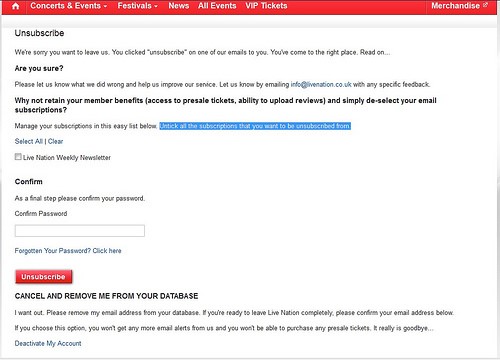
There’s another danger too. If your emails frequently get branded as being spam, you stand a good chance of being blacklisted by Google, so you can kiss bye-bye to any prospects of email marketing full stop! It’s also vital that you include an unsubscribe link as this is required by law; you can get software and services (such as ConstantContact) to help you do this and manage your list.

Creating an Email List

By far the best way of ensuring your marketing emails get into your recipients’ inboxes is to use an email list that you have created yourself; one in which all of the contacts you have in there have given you permission to send them marketing emails. It’s not difficult to compile such a list, but if your business is a new start-up, it may take some time before it contains enough permission based contact to merit using it to generate an email marketing campaign.

Consider how you can use your site for this; do you offer different incentives for your visitors to fill in their email address? Perhaps used to ask for quotes/more info, or even better, provide a form with downloadable content so that the visitor has to fill in their email address to access it. This can be anything from white papers to video, but it must be useful and relevant or the reader will feel cheated.

Buying Email Lists

Personally, I wouldn’t bother as you have no guarantee that the list serves your target audience in many cases. However, if you must, use a specialist email list service provider. If you do decide to go down this route, you must research your supplier and ask how they come about these lists. Well before buying anything from. There are unfortunately plenty of unscrupulous people around who will sell you start on neither permission-based, nor relevant to your particular market niche. So look before you leap!

Creating Effective Email Marketing Content

Okay, so let’s now assume that you’ve avoided the spam trap and your email is safely in your recipients email in tray. It’s still no guarantee being read! This is where the actual headline and the content itself now comes into play.

Good Lead-in and Relevant Content

So having read your reader’s attention and having enticed them to open the email you need to get straight down to the point. If your headline was about Blue Denim Jeans, you mustn’t start talking about corduroy trousers for example. Make sure the content is on message, short, sharp, and to the point. It needs to end with a link to your website of course and can include further links in the body.

The Importance of Presentation

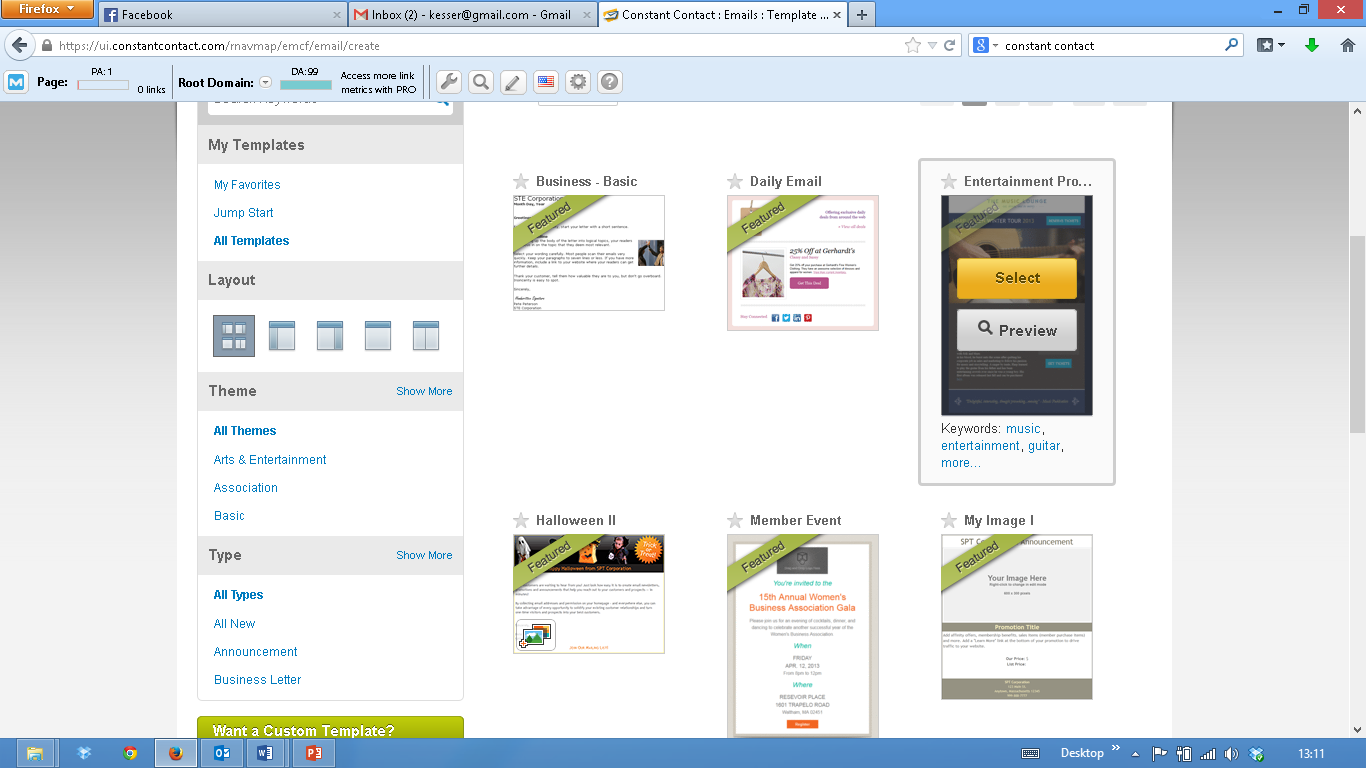
You can use a service or software to help you with this as unless you can code with HTML, it’s unlikely that you’ll be able to make an effective email that looks nice. I use Constant Contact, so let’s have a quick look at how you would create a mail with their service.

  start email

Create email in Constant Contact

As you can see, there are templates to help you to choose layout and you can also chose colour schemes to suit your brand.

 create an email

Next, you simply edit the layout, adding colours, backgrounds, images and text using the online editor. Note that at the top of the page there’s a Spam Check button, so that you can keep an eye on how your content is shaping up with regard to spam.

 email settings

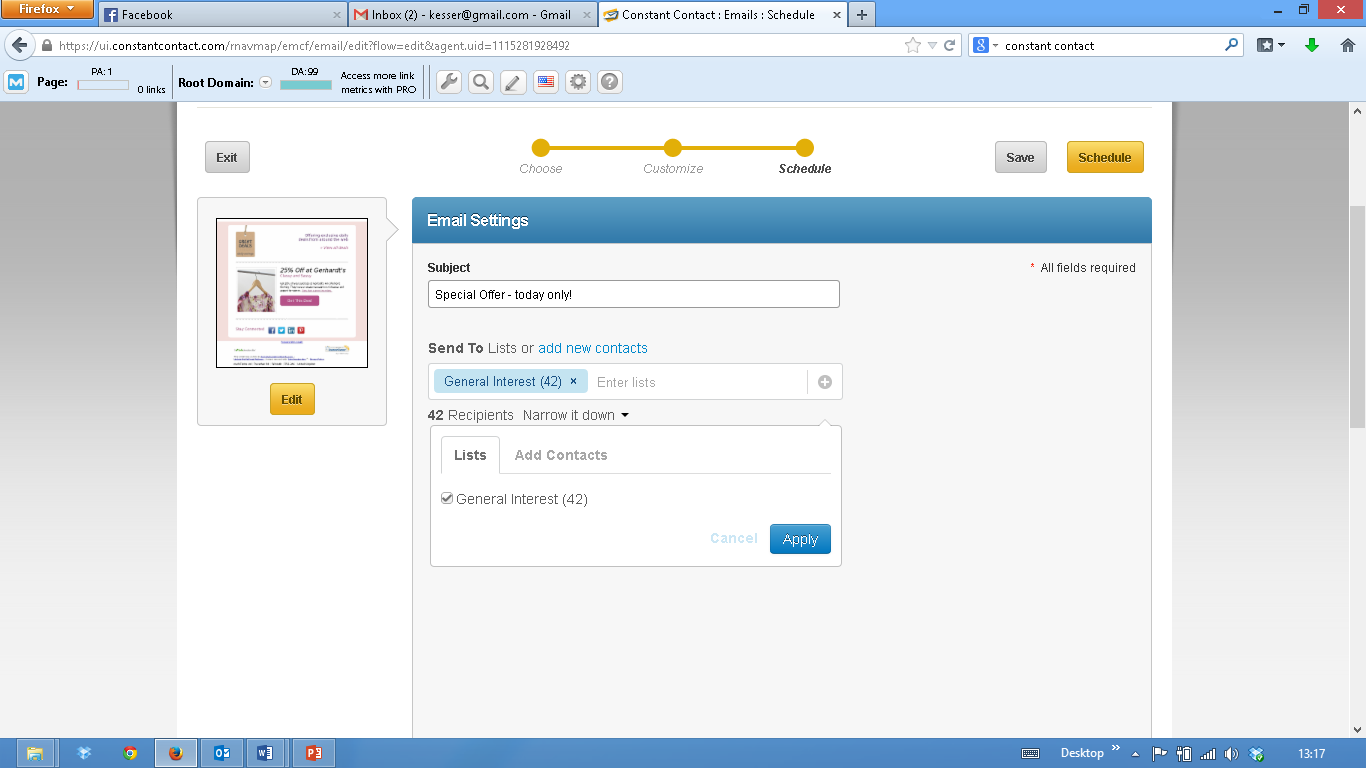
Next you add your lists, which you can import from a number of sources and save into groups, so that moving forward you can better personalise. Also notice the Schedule button, which allows you to send out the mail at a time when your research will have told you that your target audience is likely to open it.

 Constant content email open rate

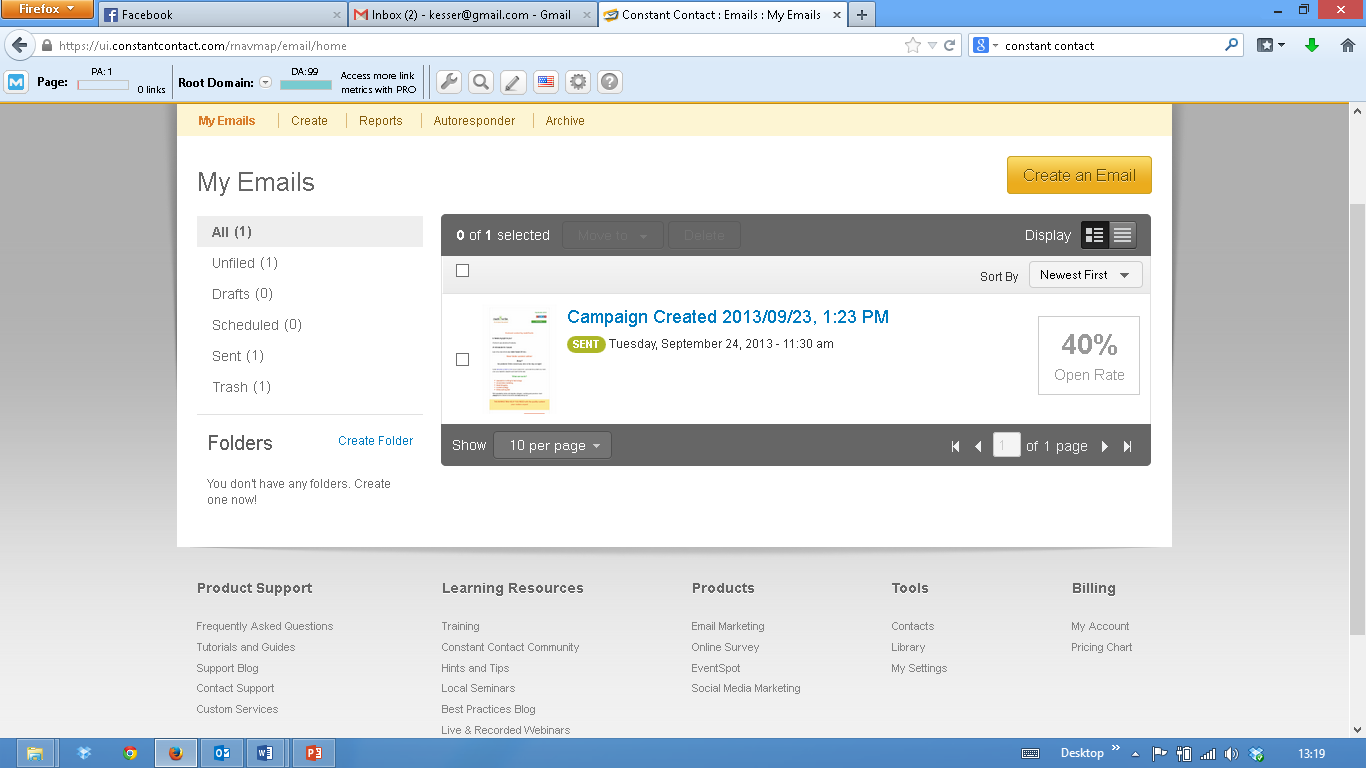
You can then track how many people opened the mail and how many clicked through to measure effectiveness.

The Follow-up

Although this is nothing to do with effective email content, it has everything to do with converting enquiries into sales. Whilst a small percentage of your marketing emails may result in a direct sale, it is more likely that recipients will click through to your website to have a browse. Nine times out of ten, that’s all they will do, so little much more reminder, as a follow-up, is always a good idea. It simply good email marketing campaign management.

Email Marketing is still King

Despite all of the new innovations and technologies that have been introduced recently, although it’s not sexy, email marketing is still King. When carefully constructed and filled with effective content, email marketing campaign offer an ROI of up to 4,300% according to the DMA.

In fact, personalised email is now the way to go, hence using different lists for different targets, allowing you to really drill down exactly which customers you want to send different mail to.


A Guide to Google’s Hummingbird Algorithm Update

Hummingbird

Photo credit: Mike Baird

There is always something new happening out there in cyberspace; it’s the nature of the beast. One of the latest developments is Google’s “Hummingbird”. It’s often referred in a way that might at first make you think that it’s something you ought to have. But the reality of it is that you have no choice. That’s always supposing of course that you use Google as your preferred search engine, which let’s face it, the majority of us do.

Hummingbird is an Algorithm                     

Hummingbird is no more than an algorithm, which is a mathematical string or type of function that computer geeks create and make use of in order to establish certain goals, such as carrying out an online search. They are of course quite complex, and when one considers what Google does in its browsing capability, it’s no small wonder. In this case, Hummingbird is the biggest update Google has made to its major algorithms since 2011 and these address how search recognises speech and natural-sounding text. This means that it now looks at how we talk and bases its findings on this, helping to make search more intuitive and relevant.

The Things we take for Granted

We all tend to take for granted how quickly and efficiently the online search process takes. Within fractions of a second, a browser such as Google interprets the search criteria entered into the browser window, converts it into electronic data, goes away to crawl the entire World Wide Web in search of the closest matches, and turns its findings into the search engine report pages that we have become so familiar with.

Google’s Birthday Present to its Users

Google recently celebrated its 15th birthday, and in a reversal of usual birthday gift giving tradition, they gave us the present of the new, so called, Hummingbird algorithm. Whilst Google tweaks its algorithms from time to time to keep us all on our toes, Hummingbird represents the first major change to its algorithms for years. So what is its significance?

What Hummingbird Actually Does

Hummingbird heralds a significant change in the way that the online search process works, and what the focus of a search delivers. We all know the importance of using keywords. But because when searching, people sometimes feel that keywords deliver limited results, or may not deliver a properly focused report, they now often supplement those keywords with additional text. In other words, the queries or search criteria have become more complex.

It’s Become More Human

PageRank-hi-res

The new Hummingbird algorithm has in actual fact been designed to be able to interpret this new, and more complex, so called “conversational” search criteria. It has become more human. Let’s look at an example in order to clarify how the revised search algorithm works.

In the past, someone searching for a new smartphone would typically have searched under say “Apple iPhone”. Today however, they are more likely to enter something like “Where can I buy a cheap 4G compatible Smartphone?” If you were to try this, you’ll see that the algorithm responds by pulling together a complete range of websites focussing on each of the important words. It recognises the “where can I buy question”, and it reports on “cheap”, “4G”, and “Smartphone”. It provides a much more intelligent response to each segment of the search query.

Buy smart phone

It Opens Up a Whole New Ballpark

This is actually a smart move. In the first place, it creates an increased opportunity for Google to earn more revenue for themselves. That’s because eMarketeers who use the “Pay per Click” marketing methodology, (and AdWords in particular), will spot the opportunity and begin to cover all of the increased options. But it’s great for websites and businesses too, because whereas many of the generic keyword have been monopolised by the “big boys”, this now open up a whole new ballpark, and if businesses react quickly and cleverly, they can increase the flow of traffic to their websites.

A New Lease of Life for Content Marketing

By opening up the parameters of the search query, Google have breathed a new lease of life into the possibilities for content marketing. Whereas previously, many words would simply have been seen by Google as worthless padding, they will now have a more specific relevance. Website owners will now be able to include many of these extra terms within content that will now be reviewed as being relevant. This in turn creates the opportunity for new, fresh content to be used, rather than simply regurgitating the same old, time worn keywords, time after time.

The More Sinister Side of Hummingbird

Hummingbird does, however, have something that many people will view as being a little sinister. It’s what is referred to as “content scraping”. When the Google spiders crawl the web in search of information, in order to index websites in response to a search query, it will gather certain relevant data and display it in the search engine report pages. This will in some cases mean that searchers will not have to click through to a particular website to glean the information for themselves. In other words, under certain circumstances, Hummingbird may actually be seen as robbing websites of traffic.

Google is a Law unto Itself

The decision to perform content scraping (even though they frown on others doing it) was unilateral. Unfortunately, Google are so large that they tend to be a law unto themselves, and if website owners are keen to improve their indexing and search engine rankings, they have no choice other than to take advantage of the new Hummingbird algorithm where they can.

Adapt and Evolve

It’s not the first time that website owners will be left feeling a little vulnerable by Google, nor will it be the last. What it means in effect is that websites will have to adapt and offer something special in order to make it worthwhile for visitors to click through to them. But one thing we have all learned throughout the ongoing growth phenomenon that is the World Wide Web is that it does evolve, and it evolves quickly, far more quickly than a certain Charles Darwin would have ever dreamt possible.

Finally, a little reassurance. Google’s Hummingbird is very unlikely to have a detrimental effect on your site in a similar way that Penguin and Panda affected many people. The algorithm has actually been out for over a month anyway, so you’re likely to have noticed.

If you have a site that utilises keywords properly and also uses white hat SEO practices that ensures that you build followers and traffic organically or through PPC, then you shouldn’t worry at all. A site with quality content, that takes advantage of social media and other distribution channels, will continue to perform as it always has, if not slightly better.

Social Media Monitoring – Listening, Signals & Tools

The old joke about humans having two ears, two eyes and one mouth and needing to remember why holds very true in the modern world of social media.  Social networks offer interaction, dialogue, two-way or multi-way communication; in other words, it’s the place to listen to your customers as well as to talk to them.

In fact, four parts listening to one part talking is probably a very effective social media strategy, because you not only need to listen to what people are saying to you, but also to what people are saying about you.  Your brand reputation is too important to be left to chance, so it’s important to be a proactive and effective social listener.  Here are some thoughts on making that happen.

Identify who is responsible for listening to what

It’s important to avoid “I thought you knew” syndrome by having a clearly responsible party or parties charged with the responsibility of monitoring conversations about your brand.  Depending on the nature of your business, you may need to involve people from different areas to ensure that all conversations are fully understood, for example a corporate communications team in a computer software company may not understand highly technical discussions.

Ideally there should also be a channel for employees to flag up conversations they’ve noted without getting involved.  Hopefully your monitoring team will already be aware of these, but better safe than sorry.

Define what you are monitoring, why and for what purpose

It might be nice to know everything, everyone, everywhere is saying about your brand, but in reality, the resources involved in this sort of monitoring would be enormous and that is even before you start the process of turning data into information.  This means you need to focus on what matters most to you and select your monitoring tools with this in mind.

There are basically four reasons for monitoring social media

  1. To generate traffic: in this case you’re looking for evidence of unique visitors to your website as a result of social media monitoring and engagement, usually social media campaigns.
  2. To create brand following: in this case, you’re looking for friends, followers, subscribers and so forth, basically anyone who makes a point of paying attention to what you say and do.
  3. To engage with customers: in this case you’re looking for evidence of people connecting with you, Facebook comments, retweets, sharing and so forth.
  4. To generate revenue: although this is arguably the end goal of all of the above, if you’re monitoring the link between interaction and profit, you’ll need a tool which helps assign a monetary value to your presence on social media, be it active or passive.

Choose your tracking tools

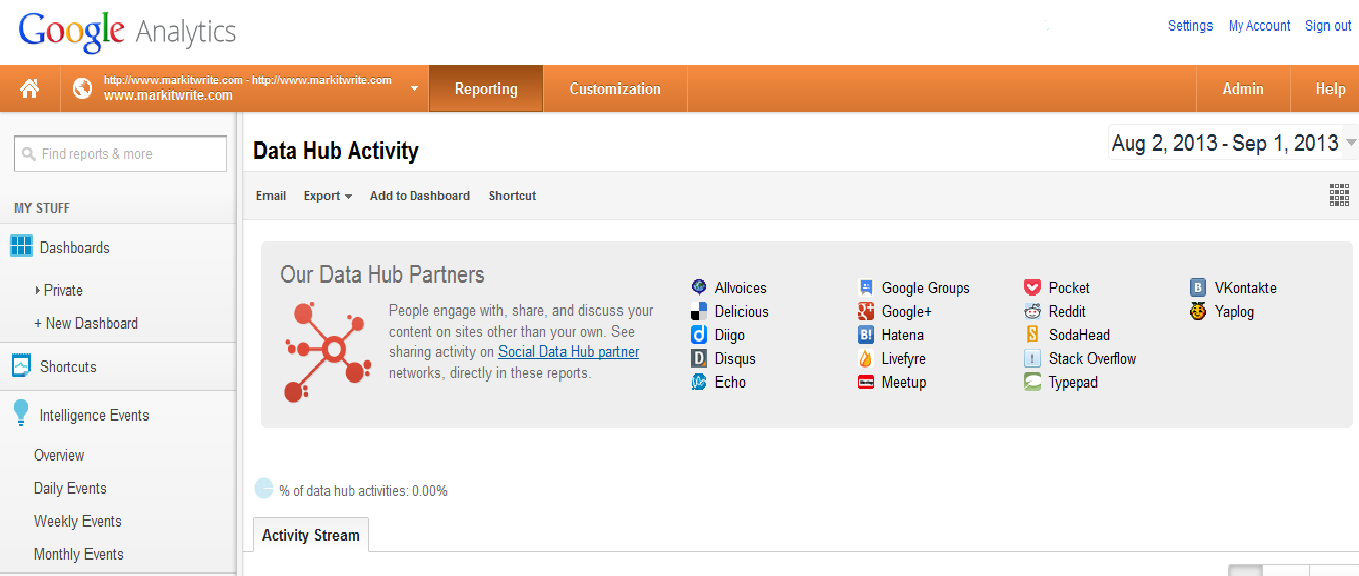
Google Analytics is a compelling choice since the data it provides is both broad and deep.  In terms of social media monitoring tools are the Data Hub Activity report and the Trackbacks report.

The Data Hub Activity Report shows how your web content is being perceived on social media networks.  It looks at conversations, comments, shares, likes, retweets and so forth.

 Analytics data hub

The Trackbacks report shows what sites are linking to you and highlights the context in which they are making the connection.  People are often judged by the company they keep, websites are too.

Another hugely useful (currently) free tool is Tagboard.  This tool can be used to track hashtags across multiple social media platforms.  Alternatively you can filter by site to compare comments on different platforms.

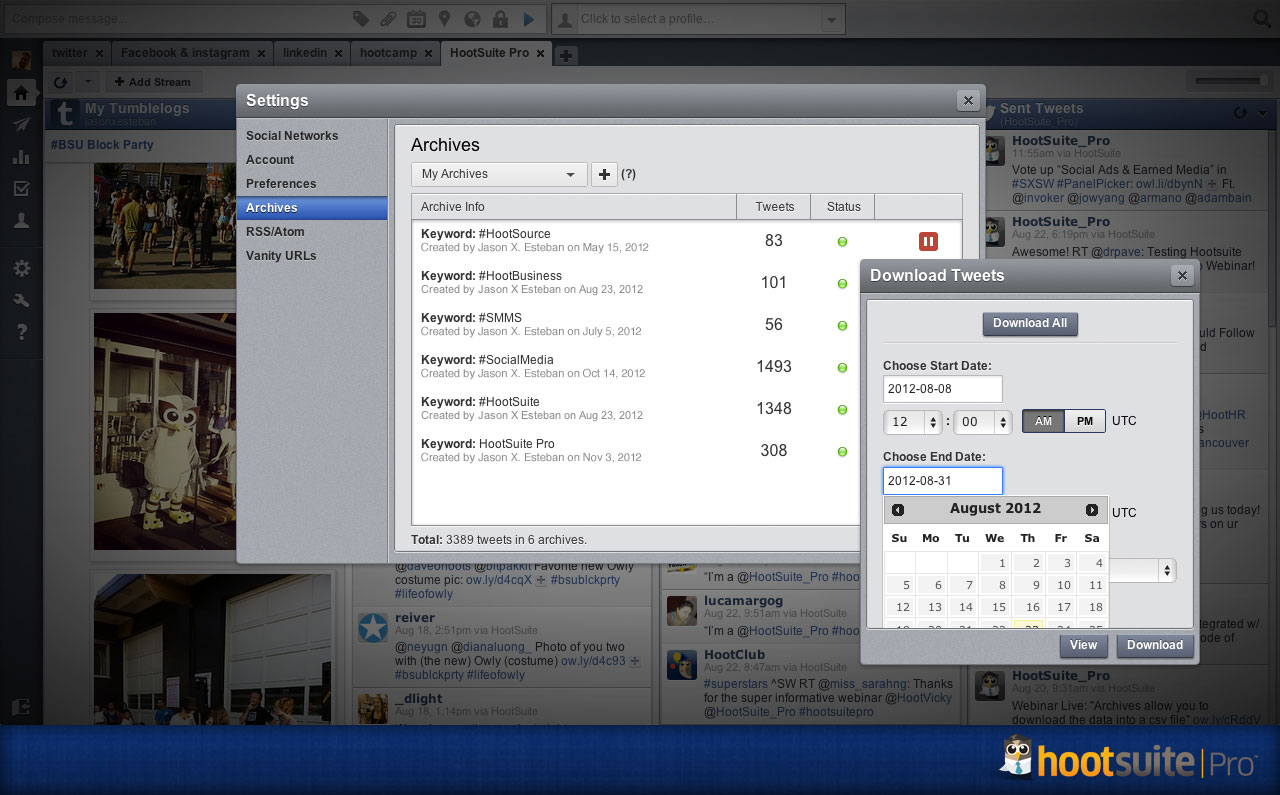
The venerable Hootsuite has built a solid reputation for social media management, which includes listening.  Part of the reason for its success is the fact that in spite of its power, it is fairly simple to learn to use.  Another reason is the breadth of the social media platforms it supports.  As well as the usual suspects, it supports both smaller sites and regional sites such as the Japanese Mixi.

 screen-shots-pro-archive2

Learning how to listen

Once you’ve organized, briefed and supported your listeners, you need to create an effective listening process.  Here is a suggested strategy.

1 – Just listen

You may have hired experienced professionals for your social media marketing campaign, but if your company is new to the area then step one is just to listen to anything and everything that is said about you.  There will be some gems and plenty of white noise but it will start to give you a feel for what the internet is saying about you.

2 – Start tracking the overall performance of the brand

Look for your brand and the key people associated with it and also your competitors.

3 – Start SWOT analysis

By this point, you should have enough experience at social media listening to start using it as part of your overall marketing strategy.  You’re looking for strengths, weaknesses, opportunities and threats.  This is the point when you need to engage your social media mouth to participate in conversations aimed at building on strengths and opportunities, while taking action on weaknesses and threats.  Remember that even companies with excellent customer service can still find dissatisfied customers making their views known online and engaging with them can go a long way to improving your brand image.

 SWOT

4 – Start using social media listening as a real-time tool

By now you should be actively engaging with social media both as a listener and as a participant.  You should now be developing and implementing processes to incorporate social media feedback into your company’s everyday activity.  For example, if there’s clear evidence that users are having issues with one of your products, change it as quickly as you can.

5 – Incorporate social media into customer satisfaction metrics

If you already have a process for measuring customer satisfaction, then now is the time to start incorporating all the free feedback offered on social media sites.  If you don’t, now is the time to start one.

6 – Create a customer communication channel

Social media gives you the opportunity to go to where your customers are, rather than waiting for them to come to you.  While any type of communication between an organization and a customer has the potential to go public (or even viral), some forms of engagement are, by nature, public, so you will need to ensure staff are trained appropriately.

7 – Integrating the experience with customer relationship management

This is the point where you move from engagement to management.  Knowing where your customers like to be, both in terms of platform and in terms of location, what they like to do and who they like to do it with, gives you a head start in encouraging them to buy your products or services.

8 –Anticipate promising trends

This involves combining historical data regarding customer behaviour with current social media monitoring to predict where your company needs to be.  It is the most sophisticated use of social media monitoring and the most rewarding.